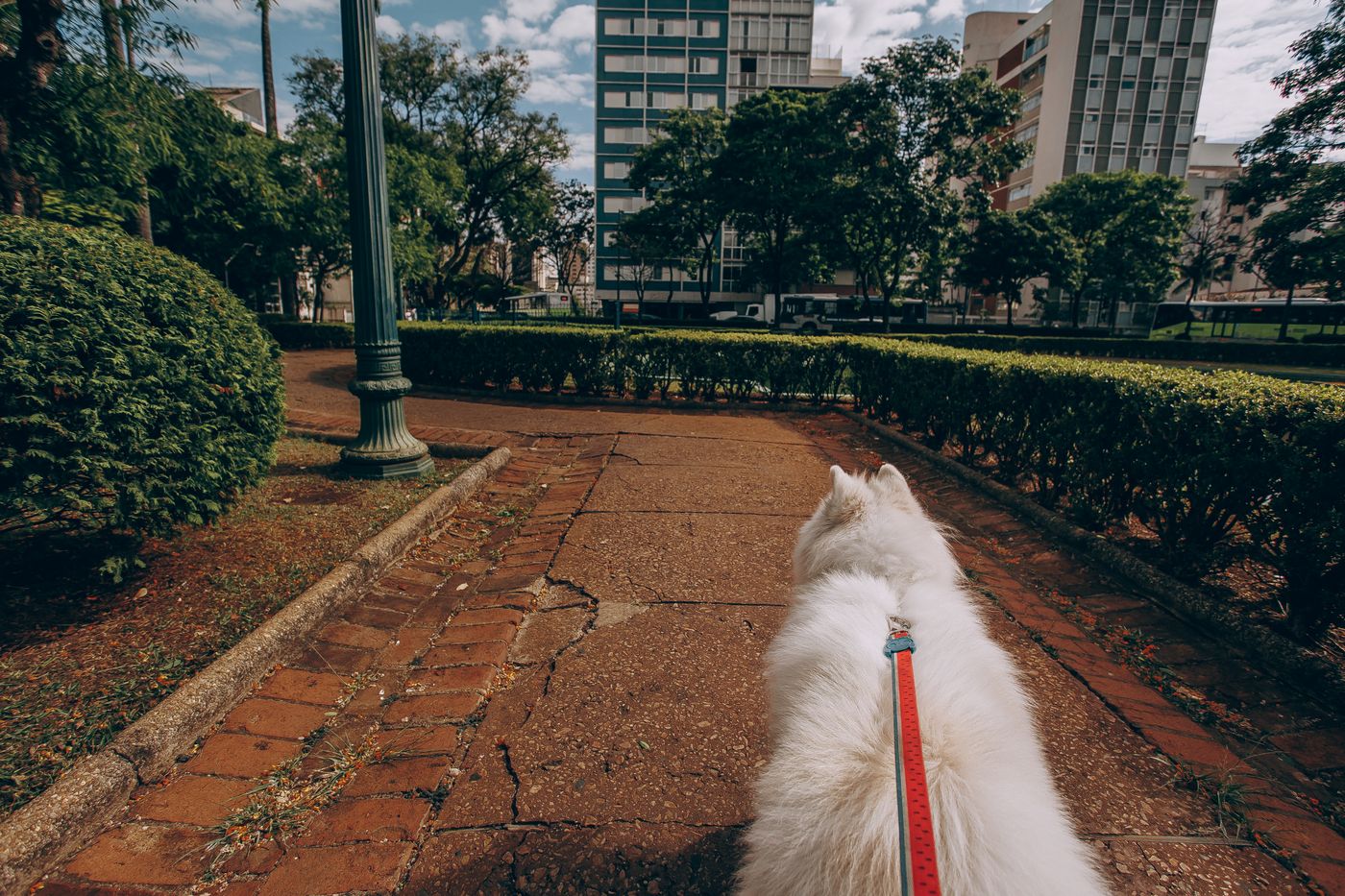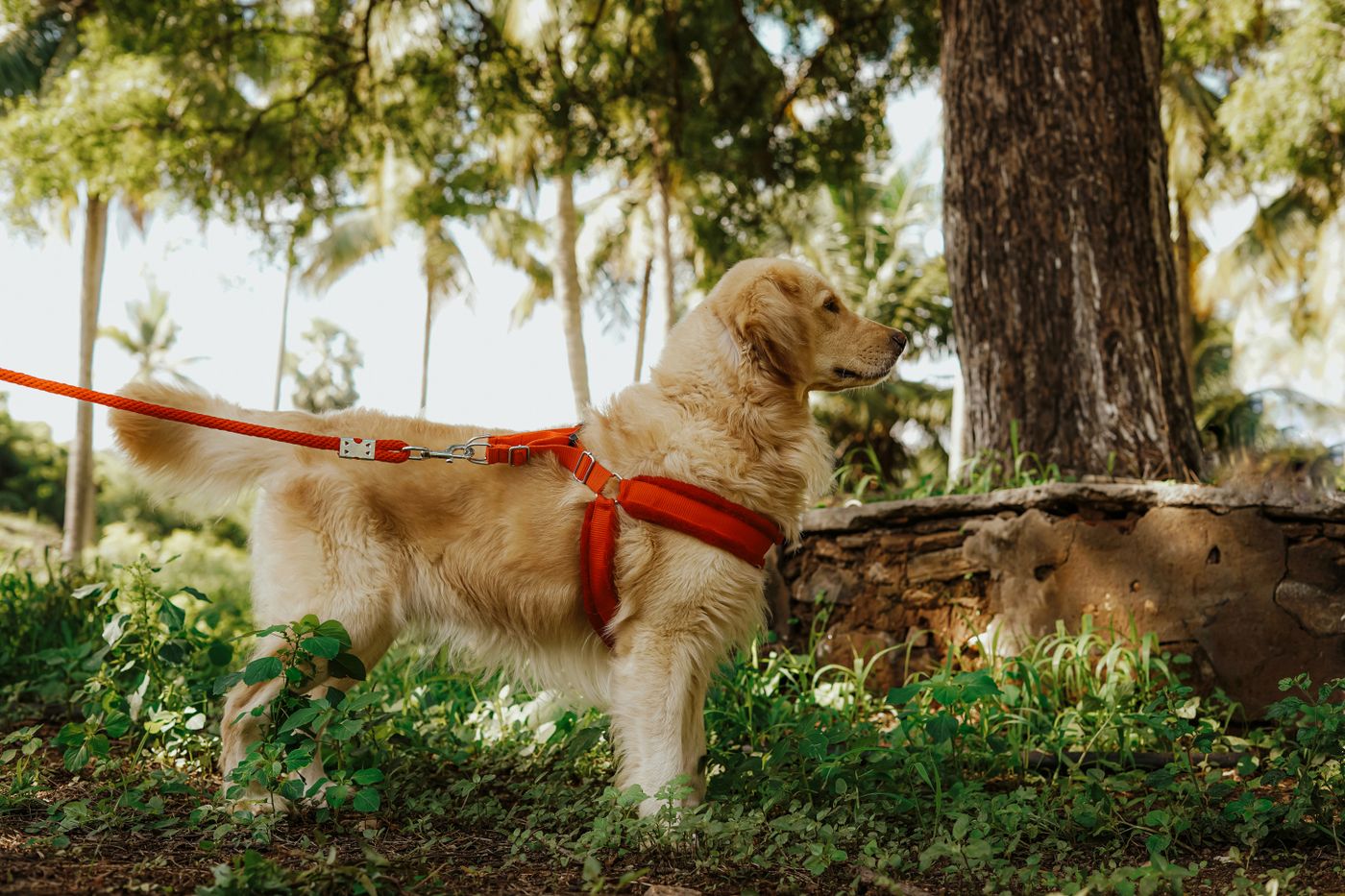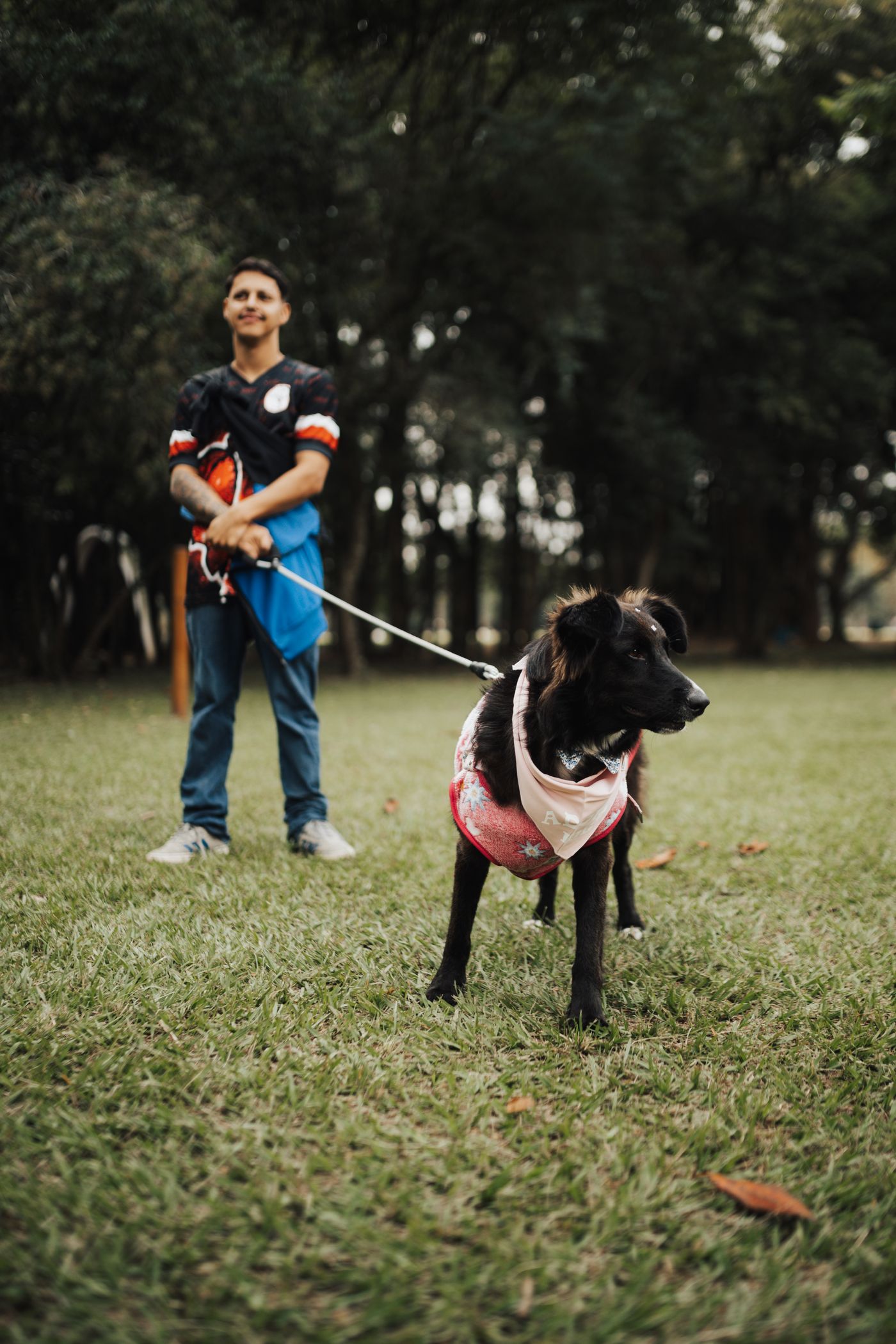
A size label or a dog's weight cannot describe the shape of its neck, chest and back. Taking a few careful measurements gives you a better basis for comparing equipment across brands. Prepare for a relaxed session and check the resulting fit while your dog moves.
Set up for an easy measurement
Choose a level, non-slip surface and let your dog stand naturally. Have small rewards ready and, if helpful, ask another person to offer them while you measure. Keep the tape close to the coat without compressing the body. Take each measurement twice and record the date.
The four useful measurements
- Neck: measure where the collar or garment is intended to sit. Follow the product's instructions about allowance and placement.
- Chest: measure around the widest part of the ribcage, usually just behind the front legs. Check harness instructions for additional dimensions.
- Back length: for many coats, measure from the base of the neck to the base of the tail. Brands may define their starting point differently.
- Height: measure from the floor to the top of the shoulders while the dog stands normally; some carrier guidance also asks for standing head height.
For crates and carriers, measure body length and overall standing height as required by the manufacturer or transport provider. Your dog should be able to stand, turn and rest naturally in the intended enclosure.
Try the fit in motion
After purchase, watch your dog walk, turn, sit and lie down. Look for rubbing behind the legs, pressure on the throat, restricted shoulder movement or gaps that allow escape. An adjustable strap is useful only within its designed range.
Growing puppies and dogs whose weight changes need fresh measurements. If your dog is worried by the tape, introduce it gradually and finish another day. Accurate sizing should not require a wrestling match.
ONE THING TO TAKE WITH YOU
Measure the dog, check the specific size chart, then confirm comfort during movement.
FURTHER READING
Editorially checked on 23 November 2026. Sources are provided for further reading; this is not an individual veterinary assessment.