Repeated tear moisture can leave reddish-brown marks on pale fur, but the colour does not identify a disease. Stronger scrubbing is not a solution for excessive tearing. Notice eye comfort and changes in the pattern before choosing a cleaning routine.
Notice more than the stain
Squinting, redness, swelling, discharge, pawing at the eye or a sudden increase in tears needs veterinary attention. Eye pain and injury should be assessed promptly. Anatomy, hair contact, eyelid problems and other conditions may influence tear drainage.
Diet should not be blamed automatically, and a special food or supplement cannot be assumed to cure the problem. Avoid unsupported claims that one ingredient will clear every stain.
Clean the surrounding fur gently
Use a soft pad dampened with a suitable gentle solution, such as plain water for routine external cleaning, and wipe the fur carefully. Keep products out of the eye unless specifically intended and recommended for that use. Use a fresh area of the pad for each eye and dry surrounding fur gently.
Do not apply peroxide, bleach, essential oils or human eye medication. Trimming hair close to the eye is best left to someone with appropriate skill and equipment.
Address the reason for persistent wetness
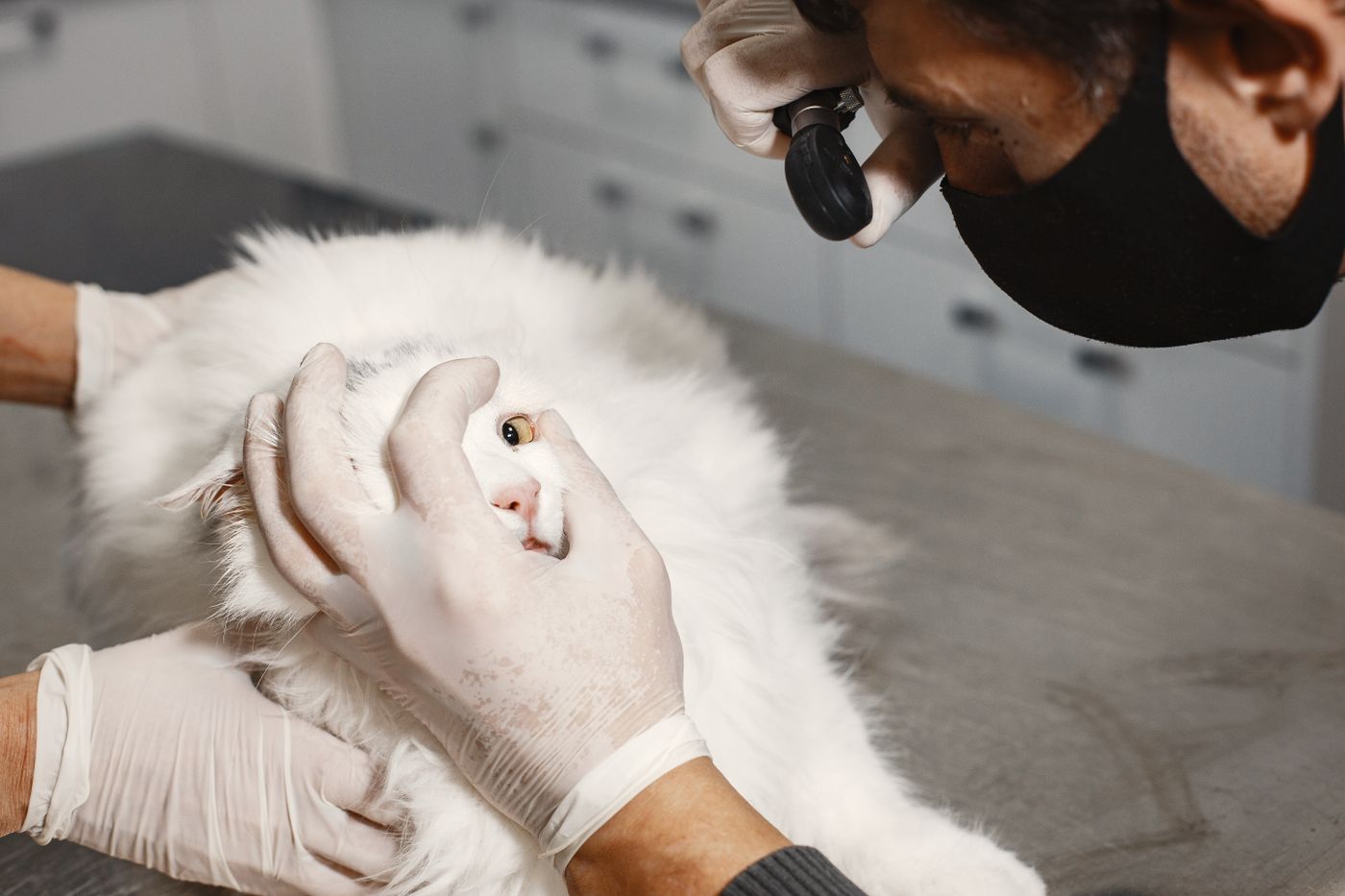
A veterinarian can examine the eye, eyelids and drainage system and decide whether treatment is needed. Keep photographs of changes if useful, but do not let documentation delay care for a painful eye.
The aim is comfortable eyes and healthy skin. Perfectly white fur is a cosmetic preference, not the measure of a successful care plan.
ONE THING TO TAKE WITH YOU
Treat the eye's comfort as the priority and avoid harsh stain-removing remedies.
FURTHER READING
Editorially checked on 23 November 2026. Sources are provided for further reading; this is not an individual veterinary assessment.
General editorial information. Your veterinary team can advise on the needs and health of your individual pet.