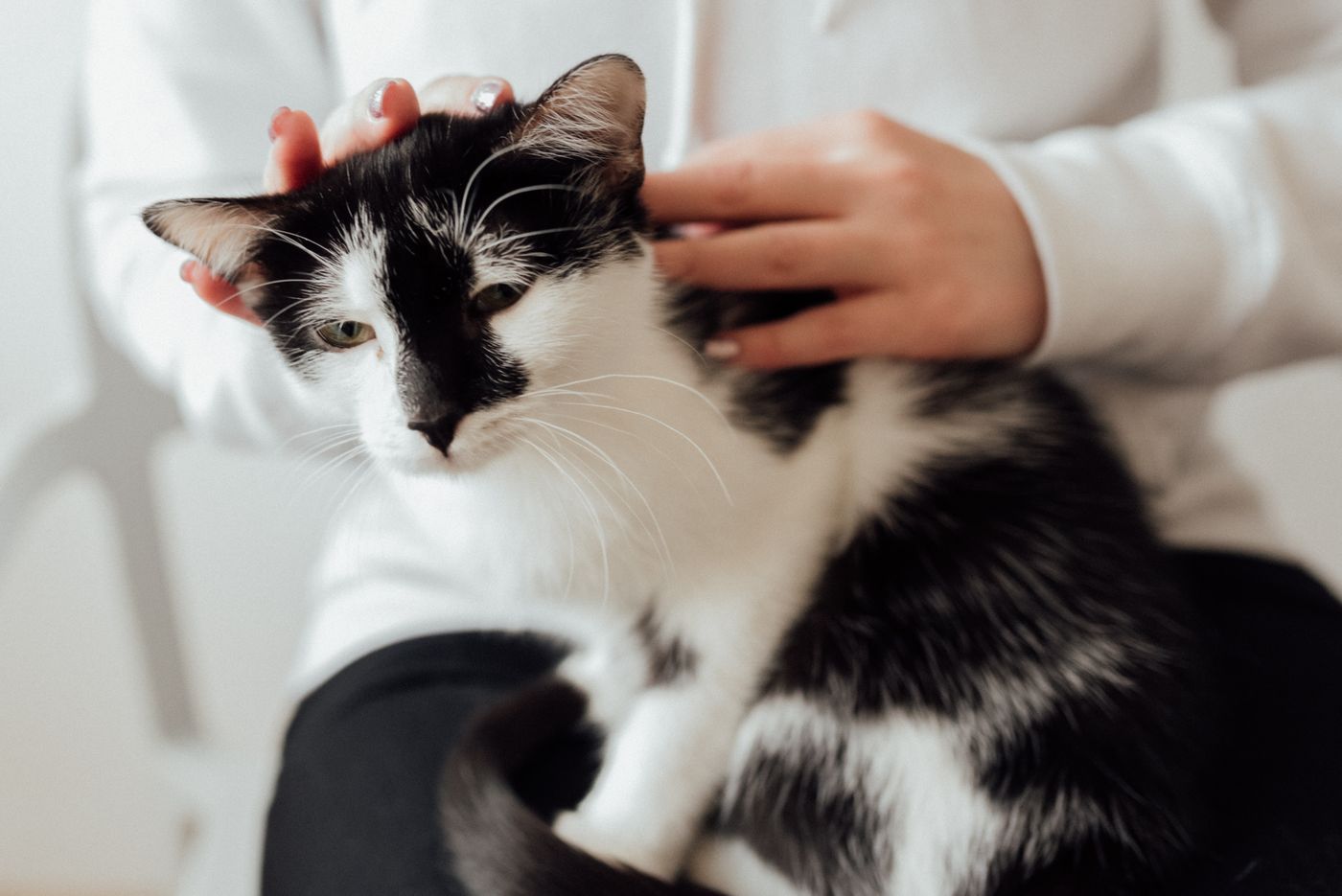
A cat's temperament reflects individual preferences, health, inherited traits and past experience. It is not something to reshape by demanding more affection. Focus on making the environment predictable and contact comfortable so your cat can choose how to take part in family life.
Reward the approach
Sit at your cat's level, avoid staring and let it close the distance. Offer a small reward or a brief cheek scratch if it enjoys touch. Pause after a few seconds. Remaining nearby does not by itself request more touch. Wait for your cat to lean toward you or otherwise initiate contact, and stop when it turns away, stiffens or leaves.
A cat that rests beside you rather than on your lap can still have a secure bond. Measure comfort by relaxed behavior, not by how much handling it tolerates.
Introduce ordinary experiences gently
Let carriers remain available as resting places. Pair brief brushing, a visitor at a distance or a quiet household sound with something pleasant. Increase exposure only when your cat stays comfortable. Early social experiences matter, but adults can learn too.
Teach an alternative to unwanted behavior
Place a suitable scratching surface beside the furniture your cat targets. Use toys for play instead of hands, and reward a perch or mat when you need space at a desk. Manage the environment before the behavior becomes a repeated conflict.
Shouting, hitting or pushing a cat into position can teach avoidance. A startled or defensive cat needs a calmer setup, not a contest of authority.
Notice a change in temperament
A previously sociable cat that suddenly hides, swats or avoids touch may be uncomfortable or ill. Arrange a veterinary assessment before treating the change as a training issue.
ONE THING TO TAKE WITH YOU
Build confidence through choice and rewarding experiences; affection should remain voluntary.
FURTHER READING
Editorially checked on 23 November 2026. Sources are provided for further reading; this is not an individual veterinary assessment.