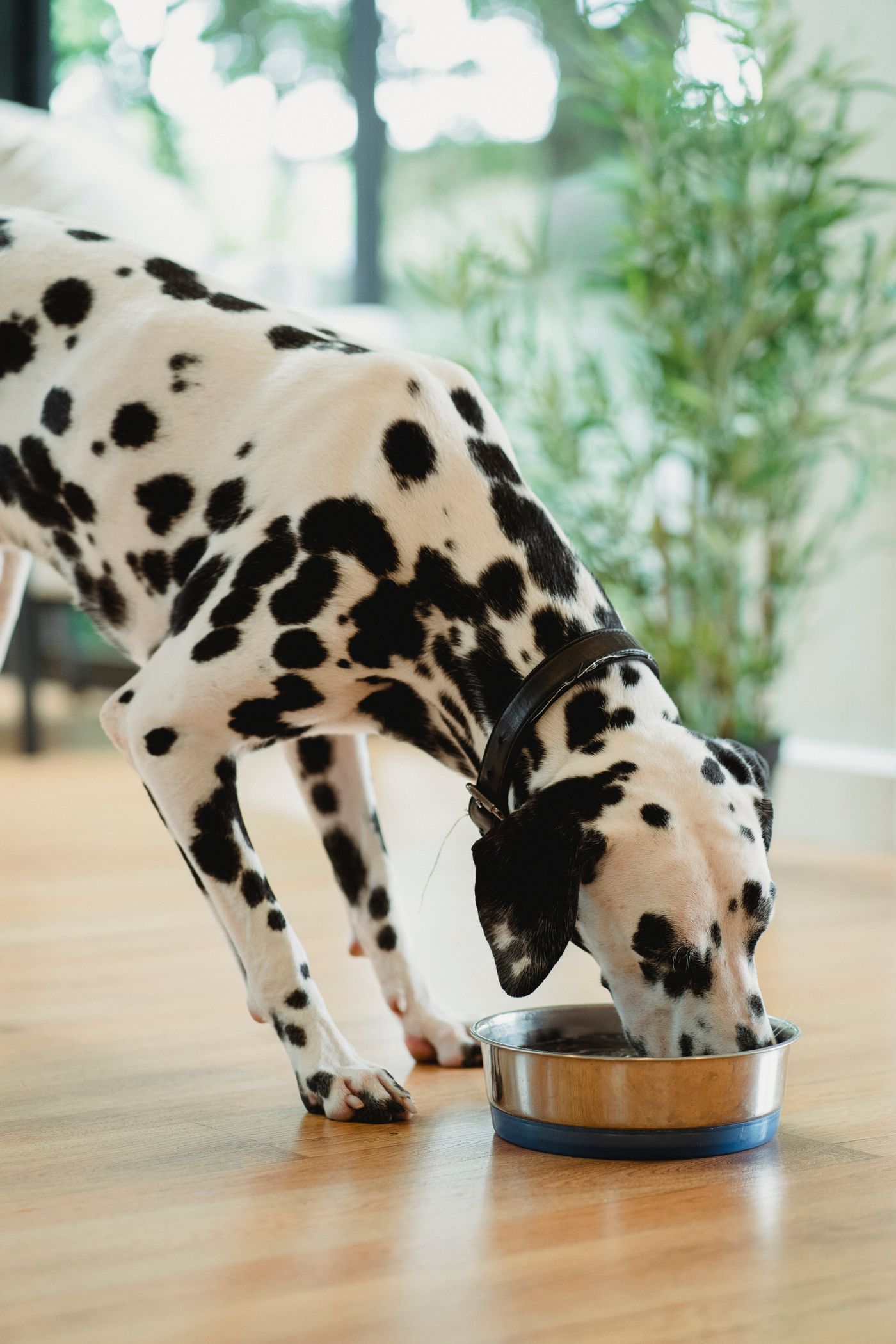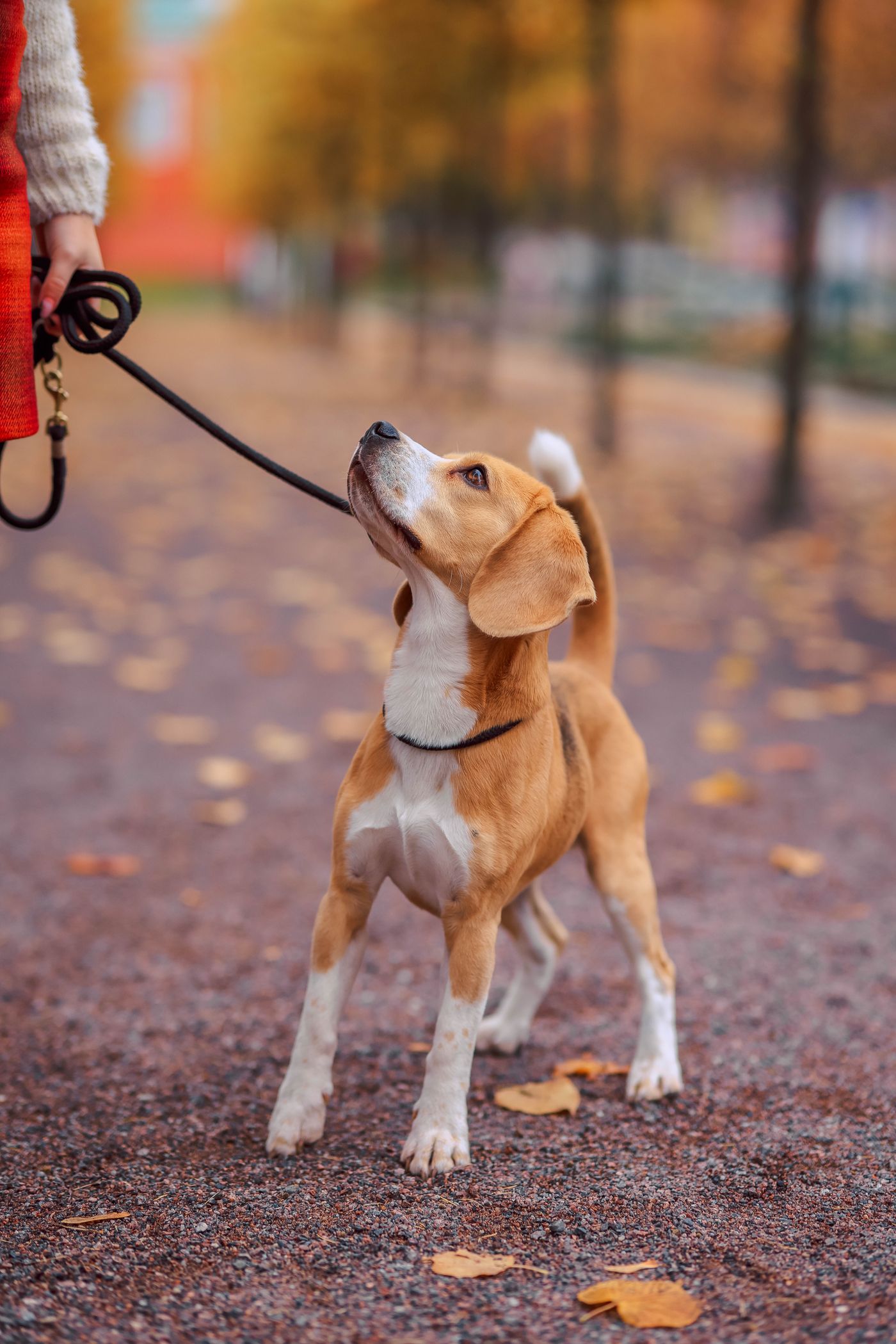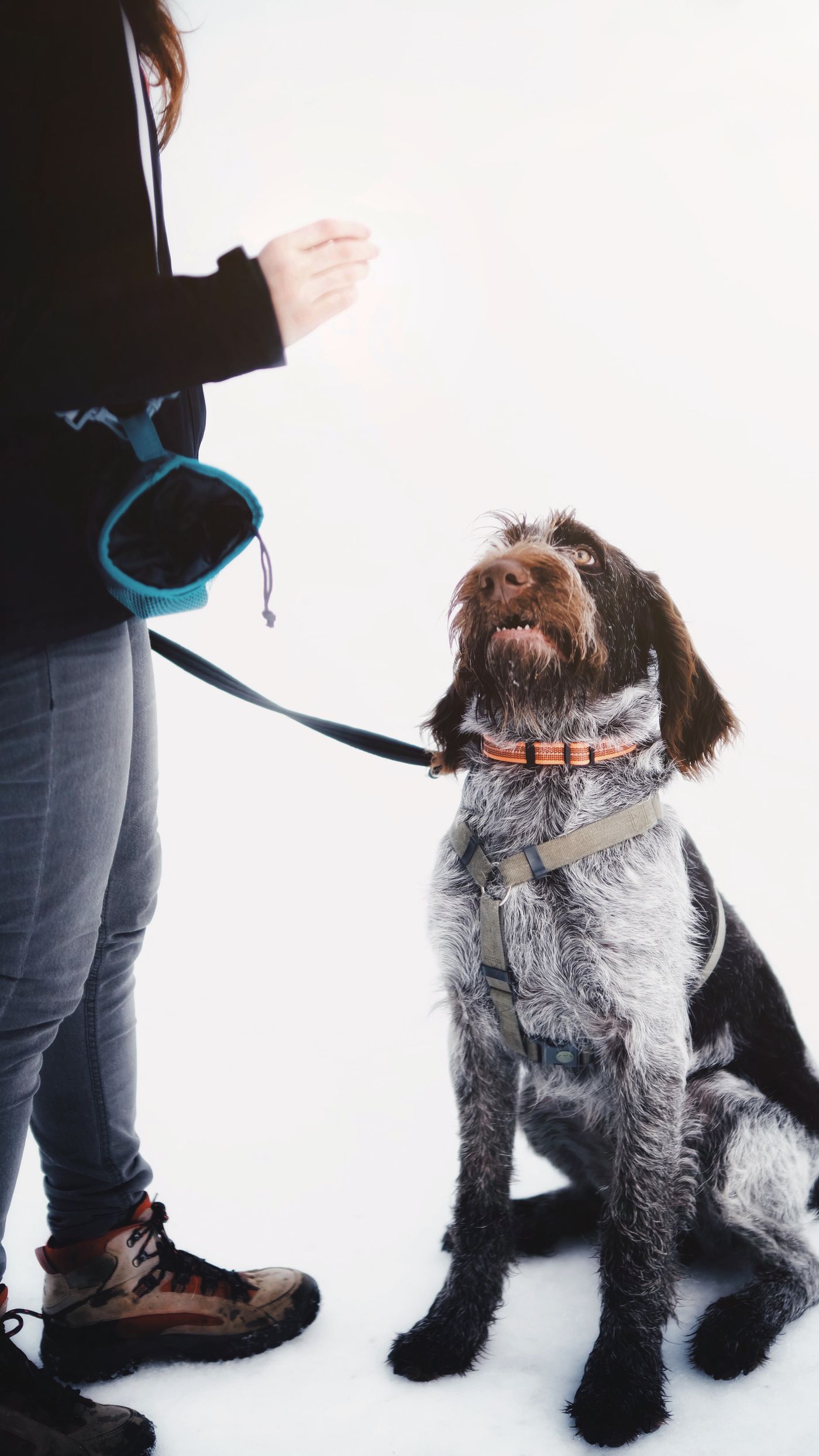
A tail wag is one part of a larger picture and can accompany several emotional states. Read posture, movement and facial signals together with the situation around the dog. What happens before and after a gesture often explains more than the gesture alone.
Start with overall tension
A comfortable dog often moves loosely, shifts weight easily and can turn away from the situation. A stiff body, fixed stare or sudden stillness deserves space. Forward movement is not always friendly, and a dog that freezes may be asking for distance without making noise.
Add ears, eyes and mouth
Compare ear position with the dog's usual relaxed posture, allowing for differences in breed and anatomy. Watch for a tight mouth, repeated lip licking, head turning or visible eye whites in context. Yawning can reflect tiredness, but it can also appear during an uncomfortable interaction.
Read the tail with the body
Consider height, speed, stiffness and movement through the hips. A tightly held, rapidly moving tail on a rigid dog is different from a broad wag with a loose body. Naturally curled or shortened tails require extra attention to other signals.
Respond before pressure builds
Pause touching, increase distance or provide an exit when your dog appears uncomfortable. Do not punish a growl; it is information that the situation needs to change. Keep children and unfamiliar dogs at a safe distance while you assess what is happening.
Learn your dog's baseline during quiet, pleasant moments. A new pattern of avoidance, sensitivity or irritability may indicate pain and should be discussed with a veterinarian.
ONE THING TO TAKE WITH YOU
Read the whole dog, compare with its normal behavior and give space when signals suggest tension.
FURTHER READING
Editorially checked on 23 November 2026. Sources are provided for further reading; this is not an individual veterinary assessment.