Prepare the room before inviting your dog into a home bath. Having the right equipment ready lets you move more calmly and decide whether a full wash is necessary. Ask for advice first when painful skin or severe fear makes ordinary bathing difficult.
Prepare and check the coat
Lay a non-slip mat and gather suitable dog shampoo, towels and rewards. Brush gently beforehand if the coat allows it. Tight mats should be assessed by a professional; soaking them can make the problem harder to manage.
Introduce water gradually
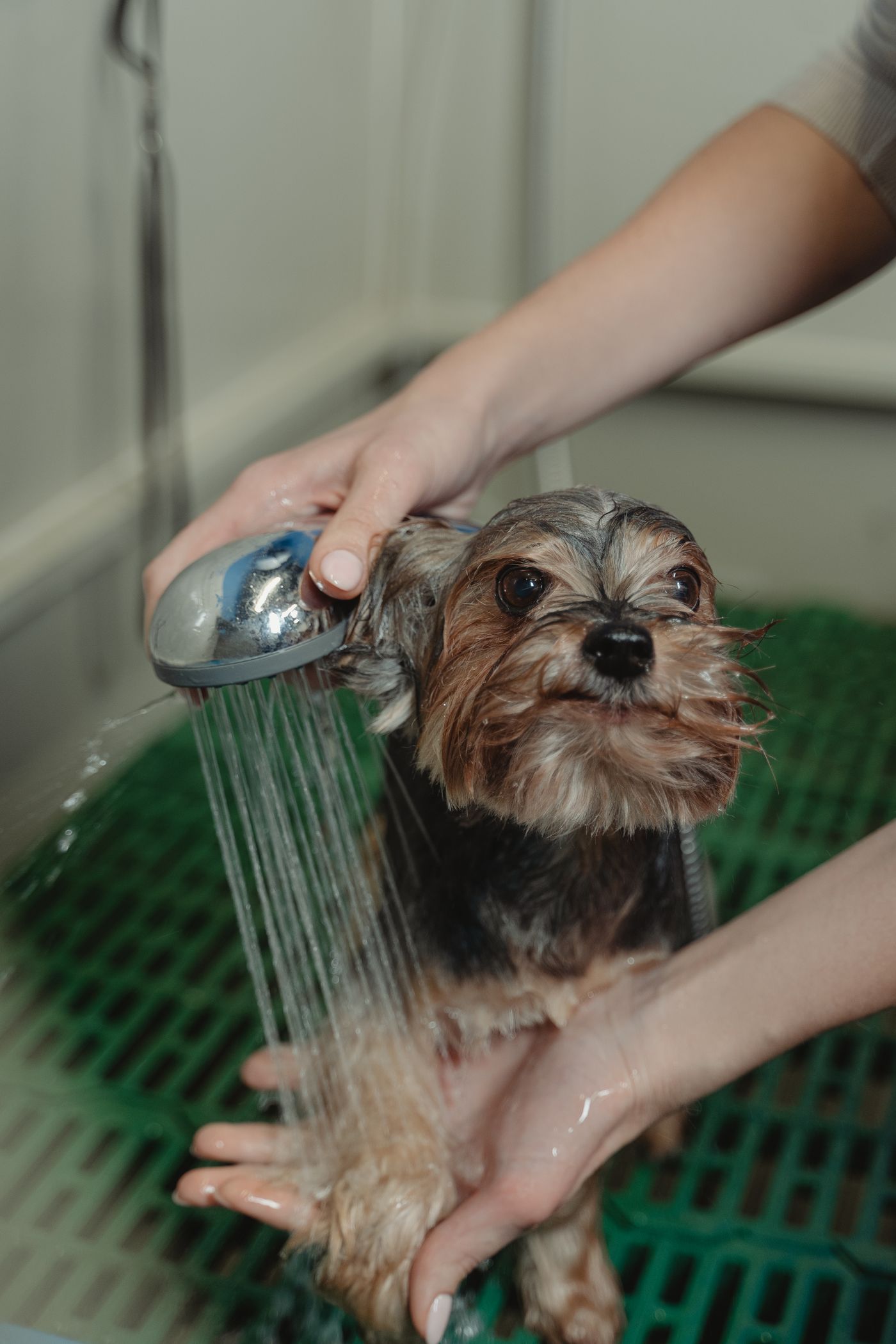
Use comfortably lukewarm water and a gentle flow. Wet the body while keeping water out of eyes, ears and nose. Avoid spraying the face directly. Reward calm participation and pause if your dog is struggling.
Wash and rinse thoroughly
Follow the shampoo's dilution and contact instructions. Massage gently without harsh scrubbing. Rinse until residue is removed, paying attention to areas where product can collect, such as under the legs. Do not substitute household cleaners or human products.
Dry with comfort in mind
Blot with towels, then use an appropriate low-temperature dryer only if your dog tolerates it. Keep airflow moving and check heat at the skin. Dry folds and dense areas carefully without overheating or frightening the animal.
Be cautious with scissors
Hair between paw pads, around the face or close to the skin can be difficult to trim safely. Do not attempt detailed clipping on a moving dog. A professional groomer can help with those areas and demonstrate routine maintenance.
Finish with rest and a small reward. A successful bath leaves the dog clean and comfortable, not exhausted by restraint.
ONE THING TO TAKE WITH YOU
Prepare first, protect eyes and ears, rinse fully and make drying gentle and complete.
FURTHER READING
Editorially checked on 23 November 2026. Sources are provided for further reading; this is not an individual veterinary assessment.