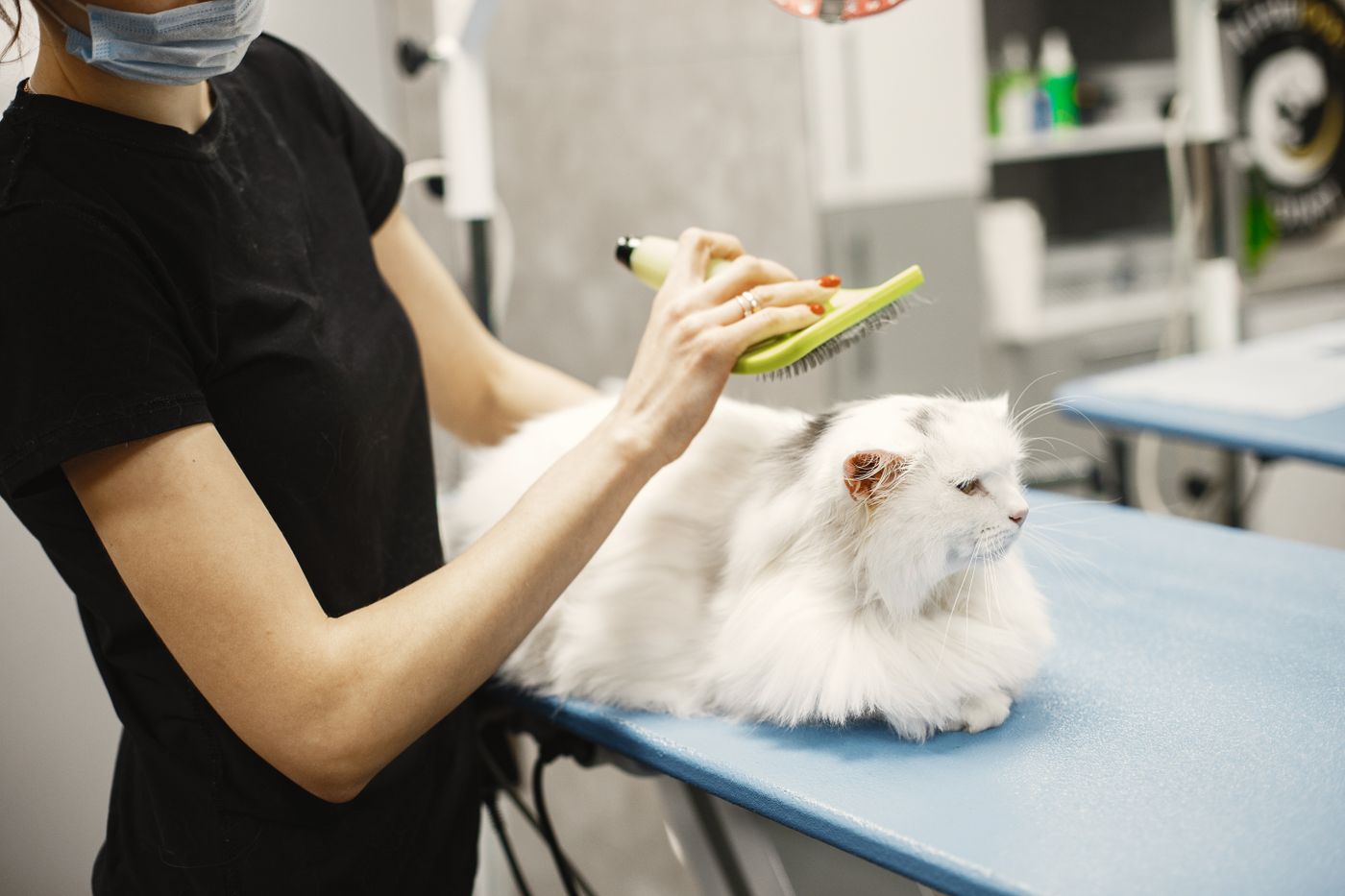
A useful brush or comb should help maintain the coat without making care a struggle. Coat density, length, skin condition and your cat's tolerance all affect the choice. Understanding one appropriate tool is usually more helpful than collecting several unfamiliar ones.
Understand the main options
- A smooth metal comb can check for small tangles and work through longer coats in sections. Tooth spacing should suit the coat.
- A soft brush or rubber grooming tool may suit a short coat and help introduce touch.
- A slicker brush can lift loose fur from some coats, but pressure and repeated passes need care.
- A flea comb is useful for close inspection; it does not replace a parasite treatment plan.
- Deshedding tools vary widely and may damage coat or skin when overused. Ask for guidance before using them.
Work gently through the coat
Choose a calm moment and a stable surface. Start in an area your cat enjoys being touched, then progress in small sections. Support the coat near a minor tangle instead of pulling against the skin. Stop when the cat becomes uncomfortable.
Leave difficult mats to a professional
Tight mats can conceal delicate skin and painful irritation. Avoid scissors close to the body or forceful brushing. A groomer or veterinary team can advise on safe removal and underlying skin concerns.
Make inspection part of the routine
Look for flakes, wounds, parasites, bald areas and changes in texture. Brushing can reduce loose hair, but repeated vomiting or suspected hairball problems still deserve veterinary advice.
Clean tools after use and keep sessions brief enough that your cat can remain a willing participant.
ONE THING TO TAKE WITH YOU
Choose for coat and comfort, use light pressure and get help with tight mats.
FURTHER READING
Editorially checked on 23 November 2026. Sources are provided for further reading; this is not an individual veterinary assessment.