A fountain is an option, not a guarantee that a cat will drink differently. Preferences for still water, sensitivity to pump noise and moisture already present in food can all affect what you observe. Assess the overall routine rather than drawing conclusions from one bowl.
Improve access and choice
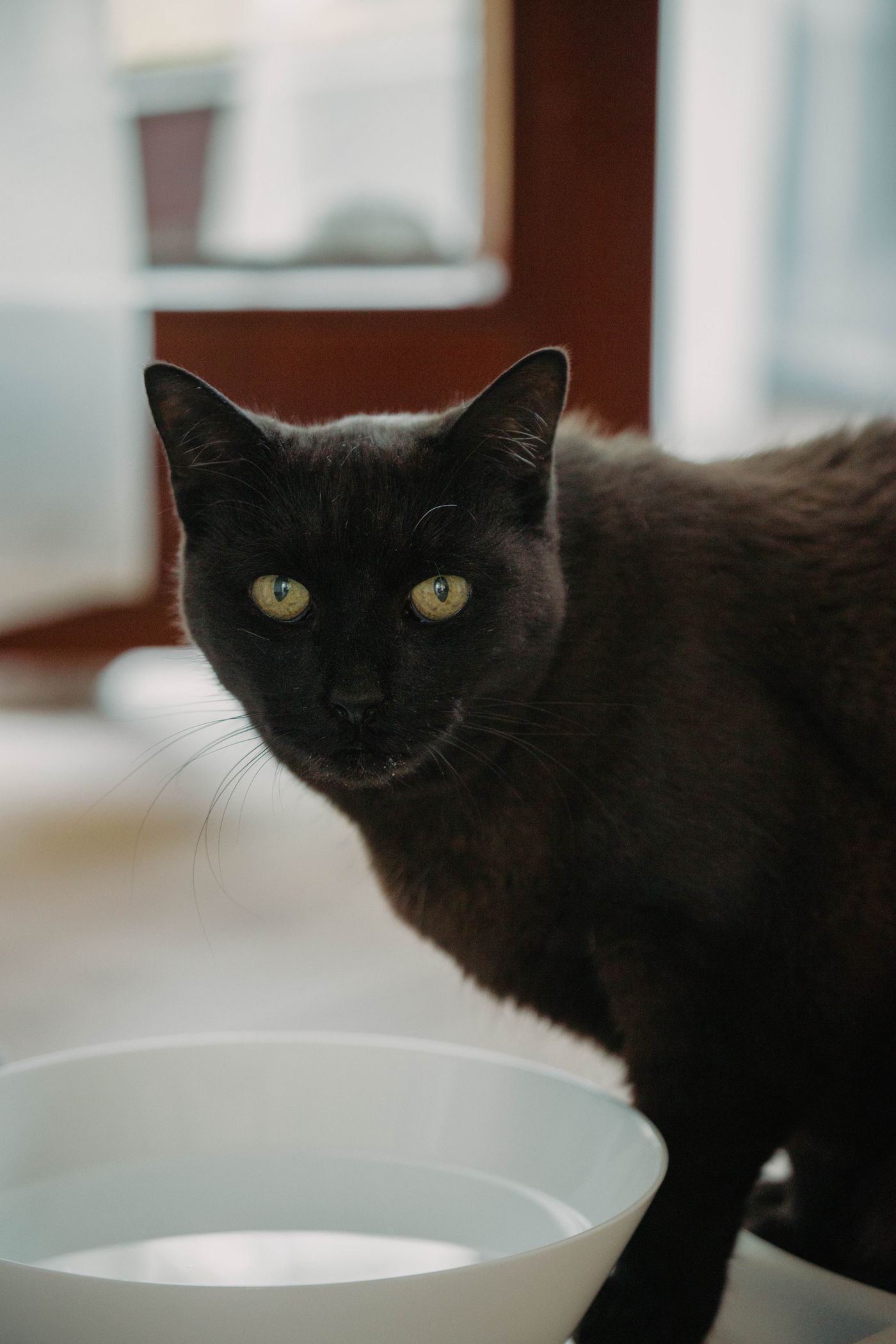
Offer fresh water in quiet, accessible places. Keep options away from litter boxes and provide separate stations in multi-cat homes. A shy cat may avoid a source that another animal guards, even when the bowl is technically available.
Try a wide, easy-to-clean bowl alongside the fountain. Do not remove the familiar source to force use of the new one. Watch where the cat naturally chooses to drink.
Check the device itself
Clean the basin, pump and other parts according to the manufacturer's directions. Filters need maintenance and do not replace washing. Check for noise, vibration, a difficult drinking height or an unexpectedly strong flow.
Consider the food
Wet food contributes water, while dry food contains much less. Any dietary change should preserve complete nutrition and suit your cat's health needs. Do not add salty liquids or force water by syringe without veterinary instruction.
Observe useful changes
Track appetite, litter-box output, energy and a marked change in thirst. Bowl-level measurements can be distorted by evaporation, splashing and other pets. They are clues, not a diagnosis.
Reduced urine, repeated straining, vomiting or lethargy needs veterinary advice. Inability to pass urine is an emergency. A better fountain is not the answer to an underlying illness.
ONE THING TO TAKE WITH YOU
Offer clean, accessible choices and assess hydration through the whole daily picture.
FURTHER READING
Editorially checked on 23 November 2026. Sources are provided for further reading; this is not an individual veterinary assessment.