Scratching posts compete with places already woven into a cat's daily routes. Stretching, scent and visible marks help explain why location matters alongside texture and stability. Watch the existing habit before deciding where a new scratching surface should stand.
Map the current habit
For a few days, notice when and where scratching happens. Is it after waking, beside the sofa where people gather or near an entrance? Record whether the cat reaches upward or stretches along the floor. Those details tell you what the replacement needs to offer.
Put the alternative beside the target
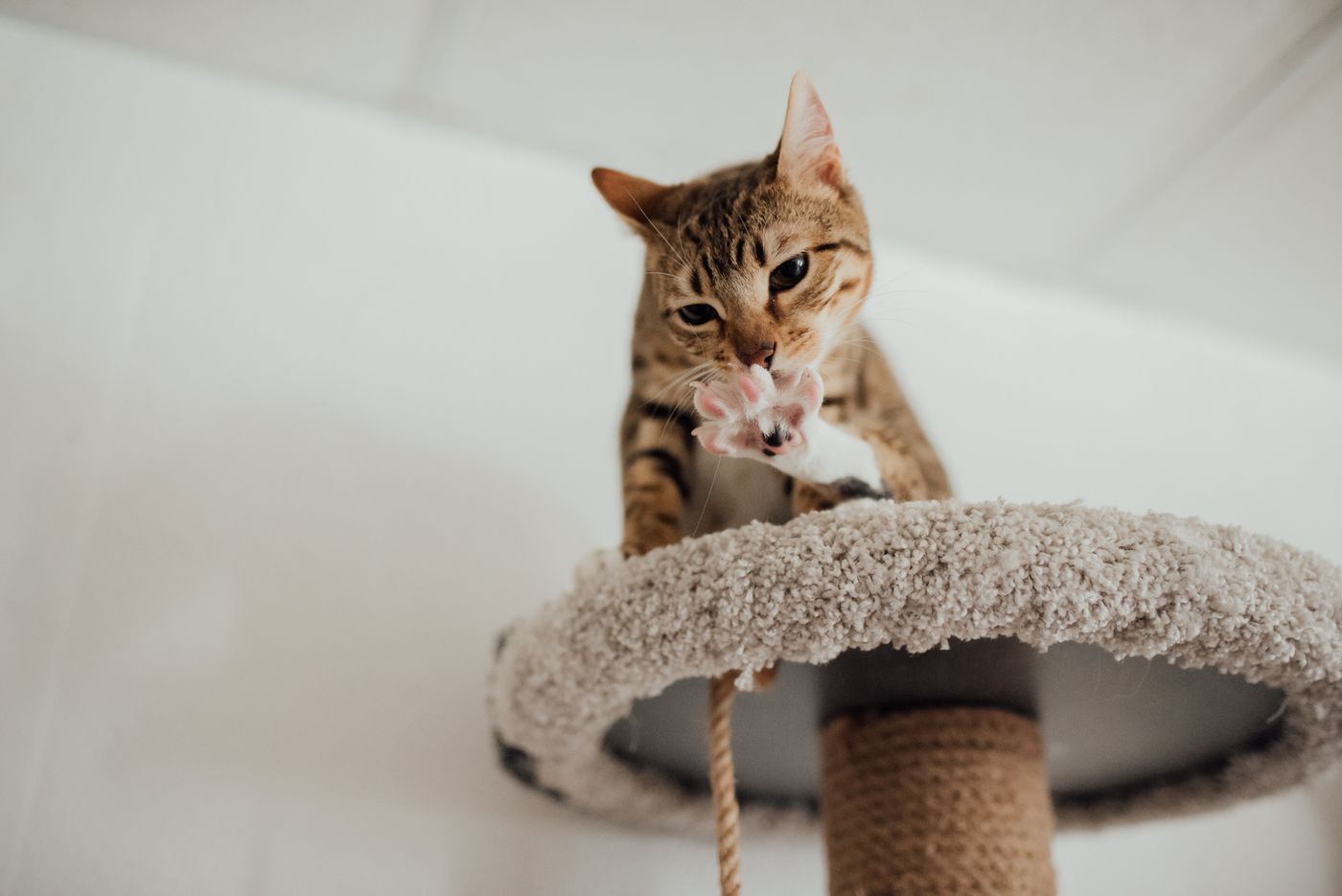
Place a sturdy post immediately beside the sofa corner being used. For a horizontal preference, position a stable pad near the relevant patch. Choose enough height or length for a full stretch and a base that does not wobble.
Do not hide every scratcher in a spare room simply because it is tidier there. In larger or multi-cat homes, several well-placed options may be needed.
Make the first experiences worthwhile
Invite investigation with a toy nearby and reward voluntary scratching. Avoid moving the cat's paws against the surface. If one texture is ignored, try another while keeping the successful location.
Protect the furniture temporarily with a suitable cover or barrier. Ensure nothing can be swallowed or entangle the cat.
Keep what works
Once the post is used consistently, resist moving it abruptly across the room. If relocation is necessary, make small changes and watch whether use continues.
A worn scratching surface may still be highly valued, provided it remains safe and stable. The goal is a useful outlet, not an accessory that always looks new.
ONE THING TO TAKE WITH YOU
Place a stable scratcher on the cat's existing route, especially beside the furniture it already chooses.
FURTHER READING
Editorially checked on 23 November 2026. Sources are provided for further reading; this is not an individual veterinary assessment.