More loose fur is worth comparing with the rest of a cat's routine. Cats naturally differ in shedding, so look beyond the hair left on clothes to skin comfort, grooming and visible loss. A sudden or concerning pattern needs assessment rather than assumptions about the season.
Separate shedding from overgrooming
Loose hairs throughout an otherwise healthy coat differ from broken hairs, bald patches or repeated licking of one area. Check gently for redness, flakes, scabs and parasites. Avoid forceful handling if the skin appears sore.
Consider recent changes
Season, indoor conditions, a new food, household stress or a grooming change may be relevant. They do not establish a cause on their own. Skin disease, parasites, pain and other medical problems can also affect the coat.
Record when the change began and whether appetite, weight, thirst or activity has changed alongside it. Photographs taken in similar light can help you track a patch.
Keep care simple while seeking advice
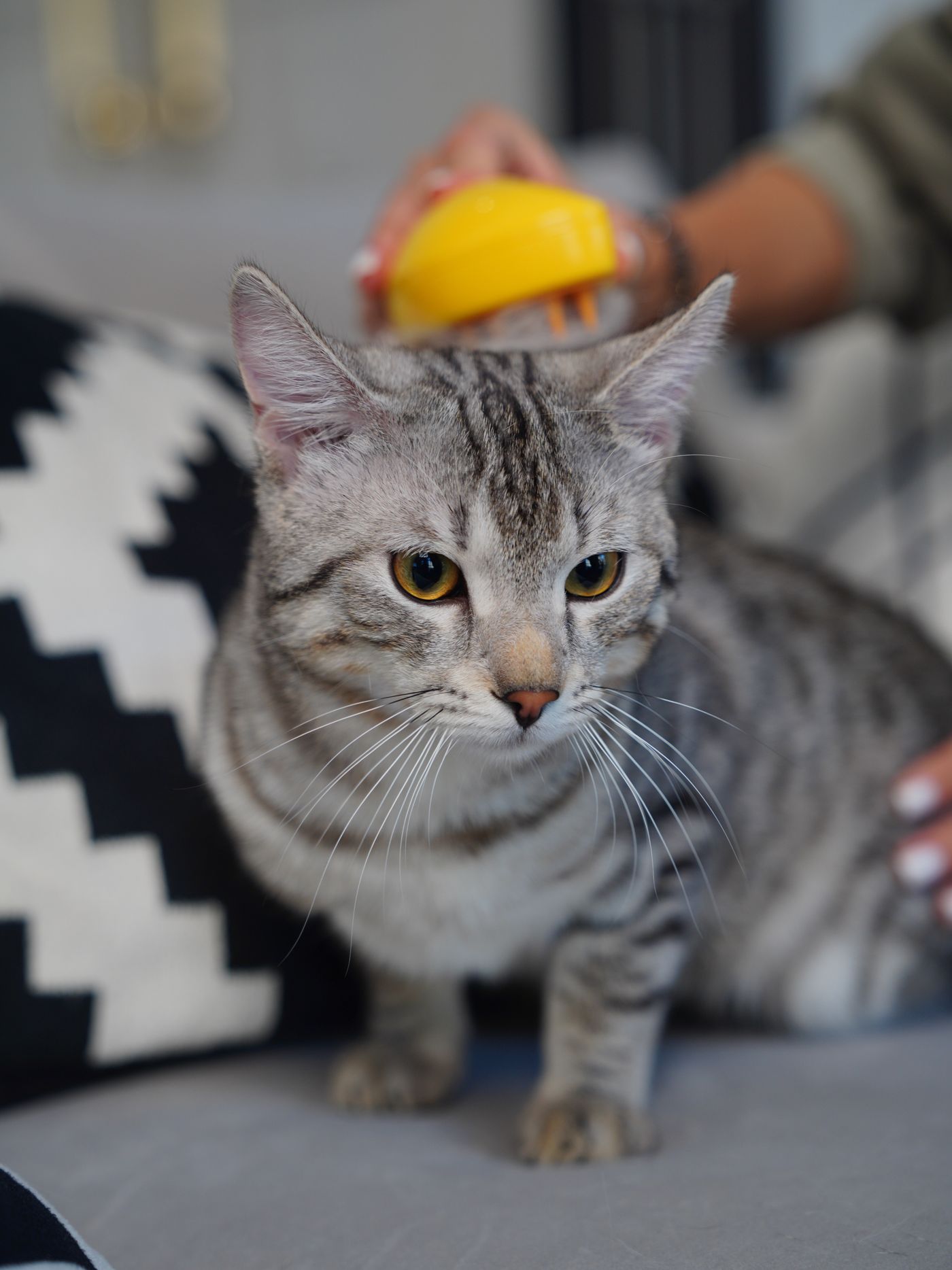
Use a suitable brush gently and continue an appropriate complete diet. Do not choose a food solely because it reaches a particular protein percentage, or add egg, fish and supplements as an improvised cure.
Avoid human skin treatments and essential oils, which may be unsafe for cats.
Arrange an examination when needed
Bald areas, wounds, marked itching, ongoing overgrooming or a sudden substantial change warrants veterinary assessment. A coat problem may need treatment, but the right treatment depends on the cause.
Seasonal shedding can be ordinary. The useful habit is noticing when your cat's version of ordinary changes.
ONE THING TO TAKE WITH YOU
Look for skin damage and altered grooming, and avoid treating unexplained hair loss with supplements alone.
FURTHER READING
Editorially checked on 23 November 2026. Sources are provided for further reading; this is not an individual veterinary assessment.